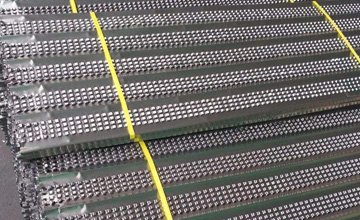
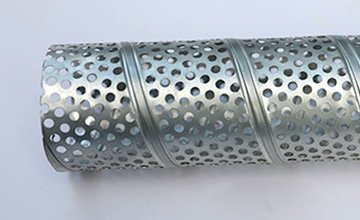
Explore expanded metal mesh pricing for 2026, including historical sheet price references, materials, dimensions, cost factors and bulk quotation guidance.
Expanded metal mesh prices vary according to material type, sheet thickness, diamond opening size, strand width, surface treatment, order quantity, and delivery terms.
For international buyers, comparing expanded metal mesh prices requires more than checking the cost per sheet. Two products with identical outside dimensions may have significantly different weights, mechanical characteristics, and manufacturing costs.
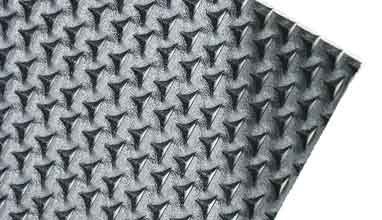
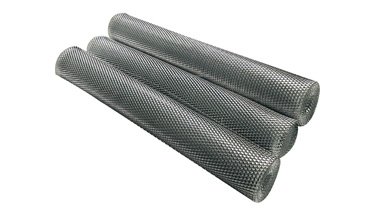
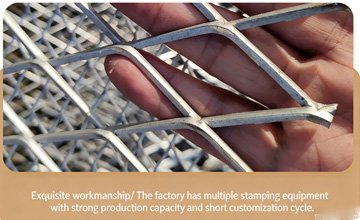
Expanded metal mesh is manufactured by slitting and stretching a solid metal sheet to create interconnected diamond-shaped openings. Unlike woven or welded wire mesh, expanded metal is formed from a continuous sheet without welded intersections.
It is widely used in construction, architectural facades, industrial equipment protection, security screens, fencing, ventilation panels, and suitable heavy-duty flooring systems.
Common materials include carbon steel, galvanized steel, aluminum alloy, stainless steel 304, and stainless steel 316.
This 2026 buying guide explains expanded metal mesh price factors, provides a clearly identified historical pricing reference, and helps importers, wholesalers, contractors, and industrial purchasers request accurate quotations.
For product specifications and available designs, visit the ANPING METAL MESH Product Center.
Expanded Metal Mesh Price List: Historical Reference and 2026 Quotations
Expanded metal mesh prices are not fixed across manufacturers, countries, or product specifications.
The following table preserves pricing examples from an earlier 2025 reference draft. These figures are historical, unverified examples rather than confirmed transaction prices.
They should not be treated as current 2026 offers or used to place purchase orders without a new supplier quotation.
Historical 2025 Expanded Metal Mesh Price Examples
The earlier reference used a nominal sheet size of approximately 1220 × 2440 mm, commonly described as 4 × 8 ft.
| Product Type | Material | Thickness | Historical 2025 Reference (USD/Sheet) |
|---|---|---|---|
| Flattened Standard Mesh | Galvanized Steel | 0.5 mm | $3.20–$4.10 |
| Security Screen Mesh | Galvanized Steel | 1.0 mm | $5.80–$6.90 |
| Aluminum Decorative Mesh | Aluminum Alloy | 1.2 mm | $7.50–$8.80 |
| Architectural Facade Mesh | Aluminum Alloy | 1.5 mm | $8.90–$10.20 |
| Small Hole Expanded Mesh | Aluminum Alloy | 0.8 mm | $6.30–$7.40 |
| Stainless Steel Expanded Mesh | SS316 | 1.0 mm | $25.80–$29.60 |
Pricing Disclaimer: These figures originate from an earlier 2025 draft and have not been independently verified. The original data does not fully identify SWD, LWD, strand width, material grade details, coating specification, minimum order quantity, or a named FOB loading port. They are not live 2026 quotations and may not represent comparable products.
Buyers should request current prices based on complete technical specifications.
Why Are Current Expanded Metal Prices Different?
Even when the sheet size and material are similar, final quotations may vary because of:
Metal grade and raw material costs.
Original sheet thickness.
Diamond opening dimensions.
Strand width and open area.
Raised or flattened finish.
Surface coating requirements.
Order quantity.
Custom cutting or framing.
Export packaging.
International shipping arrangements.
For accurate price comparisons, every supplier should quote against the same technical specification and delivery terms.
Expanded Metal Mesh Prices by Material
The metal grade is one of the most important factors affecting manufacturing cost and long-term suitability.
Different materials offer different combinations of mechanical performance, corrosion resistance, weight, and appearance.
1. Carbon Steel Expanded Metal Price
Carbon steel expanded metal is commonly used in industrial applications where mechanical strength, fabrication characteristics, and cost control are important.
It can be supplied in different sheet thicknesses, opening dimensions, and surface finishes.
Common Applications:
Industrial machinery guards.
Factory partitions.
Security barriers.
Equipment enclosures.
Metal fabrication.
General industrial screens.
Carbon steel prices are influenced by the raw steel market, material thickness, strand dimensions, and processing requirements.
Uncoated carbon steel may require galvanizing, painting, or another protective finish for outdoor applications.
2. Galvanized Expanded Metal Mesh Price
Galvanized expanded metal mesh is manufactured using steel protected by a zinc coating.
The coating helps reduce corrosion of the underlying steel in suitable environments.
It is commonly considered for outdoor fencing, industrial protection, and construction-related applications.
Main Characteristics:
Zinc-coated steel construction.
Different sheet thicknesses.
Multiple diamond opening options.
Suitable for selected outdoor environments.
Different galvanizing specifications.
The final price depends on the base steel specification and zinc coating requirements.
Hot-dip galvanizing and electro-galvanizing are different processes, and their coating specifications should not be considered interchangeable.
Buyers should confirm whether the quoted product is galvanized before or after the expanding process and whether additional protection is required for cut edges.
3. Aluminum Expanded Metal Mesh Price
Aluminum expanded metal mesh is widely considered for architectural and decorative applications because of its relatively low weight and corrosion resistance.
It is available in different alloy grades, opening patterns, thicknesses, and surface finishes.
Typical Applications:
Architectural facades.
Decorative wall panels.
Interior partitions.
Ceiling systems.
Ventilation grilles.
Sun-shading panels.
Aluminum expanded metal pricing depends on alloy grade, sheet thickness, strand dimensions, fabrication requirements, and finishing.
Powder coating and anodizing may introduce additional processing costs.
For architectural projects, buyers should evaluate total system costs, including framing, fixings, installation, and maintenance, rather than comparing the metal sheet price alone.
4. Stainless Steel 304 Expanded Metal Price
Stainless steel 304 expanded metal is suitable for many industrial and architectural environments requiring corrosion resistance.
It can be manufactured in different opening patterns and dimensions, subject to production capabilities.
Typical Applications:
Industrial screening.
Machinery protection.
Architectural decoration.
Equipment covers.
Ventilation panels.
Selected industrial processing applications.
Stainless steel pricing is affected by alloy composition, raw material cost, sheet thickness, processing, and finishing requirements.
5. Stainless Steel 316 Expanded Metal Price
Stainless steel 316 expanded metal is commonly considered for applications involving chloride exposure or other demanding corrosion conditions.
Compared with SS304, SS316 generally offers improved resistance to certain forms of chloride-related corrosion.
Typical Applications:
Coastal construction.
Marine-related facilities.
Selected chemical processing environments.
Industrial equipment protection.
Specialized architectural panels.
SS316 usually involves different material costs from SS304 because of its alloy composition.
However, no stainless steel grade should be described as permanently corrosion-proof in every environment.
Material selection should be based on actual exposure conditions and applicable engineering requirements.
Expanded Metal Price Per Sheet vs. Price Per Square Meter
International buyers often receive quotations using different measurement units.
Some suppliers quote expanded metal per sheet, while others calculate prices per square meter, square foot, or kilogram.
Comparing quotations using the same unit helps reduce confusion.
Price Per Sheet
A quotation per sheet should identify:
Sheet length.
Sheet width.
Material.
Sheet thickness.
SWD and LWD.
Strand width.
Surface finish.
Quantity.
A price per sheet without this information is insufficient for an accurate comparison.
Price Per Square Meter
The price per square meter can be calculated from the total sheet price and sheet area.
Formula:
Price per m² = Sheet Price ÷ Sheet Area
For example, a nominal 1220 × 2440 mm sheet has an area of approximately 2.98 m².
If a hypothetical sheet costs USD 18.00:
USD 18.00 ÷ 2.98 m² = approximately USD 6.04/m².
This is a calculation example only, not a current product quotation.
Price Per Kilogram
Some industrial buyers compare expanded metal products based on weight.
This method can be useful for large orders, particularly when products have different opening patterns or sheet dimensions.
However, the unit weight should be based on verified manufacturing specifications rather than estimates from sheet thickness alone.
The finished weight depends on the material density, strand dimensions, opening geometry, and surface treatment.
Main Factors Affecting Expanded Metal Mesh Prices
1. Raw Material Costs
Steel, aluminum, and stainless steel prices change over time.
These changes may influence the manufacturing cost of expanded metal sheets.
Buyers should confirm the quotation validity period, particularly for larger orders.
2. Sheet Thickness
Original sheet thickness affects the metal content and mechanical characteristics of expanded metal.
Thicker material can increase weight and processing requirements, but its influence on cost must be considered together with strand width and opening geometry.
3. Diamond Opening Dimensions
Expanded metal is commonly specified using:
SWD — Short Way of Diamond.
LWD — Long Way of Diamond.
Strand width.
Original sheet thickness.
These parameters influence open area, weight, appearance, and production feasibility.
Smaller openings do not always result in the same cost relationship across different materials and production processes.
4. Raised or Flattened Finish
Raised expanded metal retains the three-dimensional structure formed during expansion.
Flattened expanded metal undergoes an additional rolling or leveling process.
Flattening can affect the finished dimensions, surface characteristics, and processing cost.
Buyers should clearly specify which finish they require.
5. Surface Treatment
Surface treatment affects corrosion protection and appearance.
Common options include:
Mill finish.
Hot-dip galvanizing.
Powder coating.
Anodizing for suitable aluminum materials.
Other specialized finishing processes.
Different finishes have different preparation and application requirements.
The cost difference depends on the selected material, coating specification, and quantity.
6. Sheet Dimensions and Custom Cutting
Standard and custom dimensions may involve different processing requirements.
Custom cutting, trimming, bending, or framing can affect the total cost.
For larger projects, buyers may reduce material waste by planning panel dimensions according to available manufacturing sizes.
7. Order Quantity
Order quantity can influence manufacturing efficiency, packaging, and transportation cost per unit.
However, minimum order quantities and bulk discounts depend on product specifications and supplier policies.
Buyers should request pricing at their actual required quantity.
8. International Freight
Expanded metal mesh can be relatively heavy or occupy substantial cargo volume.
Freight calculations depend on:
Product dimensions.
Net and gross weight.
Packaging method.
Total shipment volume.
Destination.
Transportation method.
Agreed Incoterms.
Actual shipping costs should be confirmed using the completed packing specifications.
Standard Expanded Metal Mesh Sizes and Specifications
Understanding expanded metal dimensions helps buyers obtain comparable quotations.
Common Sheet Sizes
| Sheet Size | Approximate Metric Dimensions | Typical Application |
|---|---|---|
| 2 × 4 ft | 610 × 1220 mm | Small fabrication projects |
| 4 × 8 ft | 1220 × 2440 mm | General industrial sheets |
| 4 × 10 ft | 1220 × 3050 mm | Larger panels |
| 1000 × 2000 mm | Metric sheet | Industrial fabrication |
| 1250 × 2500 mm | Metric sheet | Architectural applications |
| Custom Size | According to drawings | Project-specific requirements |
These are commonly requested dimensional formats. Actual production availability depends on material, thickness, opening pattern, and equipment.
SWD and LWD Explained
SWD and LWD describe the short and long dimensions of the diamond pattern.
They are important for determining mesh appearance and dimensional compatibility.
Buyers should confirm whether measurements refer to opening dimensions or pitch dimensions, because suppliers may use different conventions.
Strand Width
Strand width refers to the width of the metal strips forming the expanded mesh.
It influences material consumption, open area, product rigidity, and appearance.
Original Sheet Thickness
Original sheet thickness is the thickness of the metal before the expanding process.
For raised expanded metal, the overall finished thickness may differ from the original sheet thickness.
For more technical information, see our Expanded Metal Dimensions Chart.
Expanded Metal Mesh Prices for Different Applications
Construction and Plastering
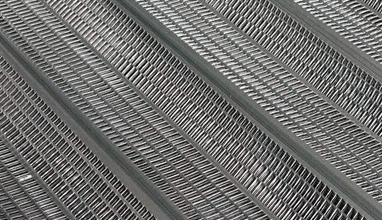
Expanded metal lath is used in suitable stucco and plaster systems.
It is a specialized construction product and should not be confused with ordinary heavy-duty expanded metal sheets.
Different lath products have specific weight, opening, and installation requirements.
For more information, read our Expanded Metal Lath for Stucco guide.
Security and Protective Panels
Expanded metal can be used for selected security screens, industrial barriers, protective doors, and framed enclosures.
The final cost depends on the mesh material, opening geometry, thickness, and complete supporting structure.
For security applications, the protective performance of the complete assembly must be evaluated.
Architectural Facades
Architectural expanded metal panels are used for building exteriors, sun-shading systems, decorative cladding, and screening.
Aluminum expanded metal is frequently considered where reduced panel weight and decorative finishes are important.
The complete project budget may include:
Expanded metal panels.
Surface coating.
Supporting frames.
Fixing components.
Engineering and design.
Installation.
Maintenance access.
Architectural facade prices should therefore be evaluated as a complete system rather than a sheet-only cost.
Industrial Machinery Protection
Expanded metal panels are used in machinery guards, equipment enclosures, and protective screens.
The appropriate specification depends on opening dimensions, required safety distances, mechanical properties, and frame design.
For machinery guarding projects, relevant safety standards should be considered.
Industrial Walkways and Platforms
Heavy-duty expanded metal can be used in certain industrial walkway and platform systems.
These applications require appropriate structural design and load verification.
The mesh should be specified according to expected loads, support spacing, installation details, and applicable safety requirements.
A quotation for general expanded metal sheets should not automatically be treated as a quotation for load-bearing walkway grating.
Filtration and Ventilation
Small hole expanded metal is used in selected screening, ventilation, and filter-support applications.
Fine expanded metal may provide an open support structure, while precise particle filtration can require additional filter media.
Price depends on the required opening dimensions, material, sheet thickness, and fabrication process.
How to Compare Expanded Metal Mesh Quotations
International buyers should request quotations using a consistent technical specification.
Step 1: Identify the Product Type
Determine whether the project requires:
Standard expanded metal.
Flattened expanded metal.
Small hole expanded metal.
Architectural expanded metal.
Heavy-duty expanded metal.
Construction-grade expanded metal lath.
Step 2: Confirm the Material
Specify the required metal grade.
For example:
Carbon steel.
Galvanized steel.
Aluminum alloy.
Stainless steel 304.
Stainless steel 316.
Where relevant, provide the exact alloy or material standard.
Step 3: Provide Dimensional Requirements
Confirm:
SWD.
LWD.
Strand width.
Original sheet thickness.
Sheet length.
Sheet width.
Raised or flattened condition.
Step 4: Confirm Surface Treatment
Identify the coating or finish required for the intended application.
For corrosion-sensitive applications, include the applicable coating requirements.
Step 5: Specify the Order Quantity
Provide the number of sheets, total area, or estimated order weight.
For orders with multiple specifications, prepare a separate line item for each product.
Step 6: Agree on the Delivery Terms
Request quotations with clearly stated Incoterms and named locations.
For example:
EXW: Price based on goods being made available at the agreed location.
FOB: Price for shipment on board a vessel at a named loading port, such as an agreed port in China.
CIF: Price including cost, freight, and insurance to the named destination port, subject to the agreed Incoterms rules.
Buyers should not assume that FOB or CIF quotations include all import taxes, customs clearance fees, or inland delivery costs.
Global Shipping and Expanded Metal Mesh Import Costs
International freight is a major part of the total landed cost for bulk expanded metal purchases.
The most appropriate transportation method depends on shipment quantity, dimensions, weight, and destination.
Sea Freight
Sea freight is commonly considered for bulk shipments of expanded metal sheets.
However, the number of sheets loaded into a container depends on their thickness, weight, dimensions, and packaging arrangements.
A fixed container quantity should not be assumed without a packing plan.
Air Freight
Air freight may be considered for smaller or urgent shipments.
Its suitability depends on shipment dimensions, weight, destination, and current carrier restrictions.
Packaging Requirements
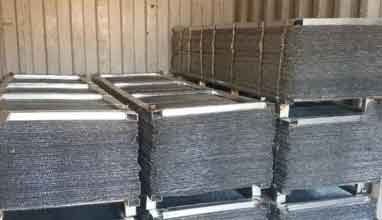
Expanded metal sheets may require protective bundling, palletizing, or other suitable packaging.
Buyers should confirm:
Number of sheets per package.
Package length and width.
Package height.
Gross and net weight.
Surface protection.
Loading arrangements.
Import Costs
The final landed cost may include:
Product value.
Packaging.
International freight.
Cargo insurance.
Import duties.
Applicable taxes.
Customs clearance charges.
Port handling.
Inland transportation.
The exact charges vary by country, product classification, and agreed delivery terms.
What Information Is Needed for an Expanded Metal Mesh Price Quotation?
Providing a complete request for quotation helps suppliers assess the required specifications and prepare a more accurate commercial offer.
| Required Information | Example |
|---|---|
| Product Type | Standard / Flattened / Small Hole / Heavy Duty |
| Material | Carbon Steel / Galvanized Steel / Aluminum / Stainless Steel |
| Material Grade | Required alloy or standard |
| Sheet Thickness | Required thickness in mm |
| Diamond Opening | SWD × LWD |
| Strand Width | Required dimension |
| Sheet Size | 1220 × 2440 mm or customized |
| Surface Treatment | Mill Finish / Galvanized / Powder Coated |
| Quantity | Number of sheets or total area |
| Application | Construction / Security / Facade / Industrial |
| Destination | Country and delivery port |
| Trade Terms | EXW / FOB / CIF / Other |
| Technical Drawings | PDF, CAD or dimensioned sketch |
For customized projects, attaching drawings, technical specifications, or reference photographs can reduce misunderstandings.
Frequently Asked Questions About Expanded Metal Mesh Prices
1. How much does expanded metal mesh cost per sheet?
Expanded metal mesh prices depend on material, thickness, diamond opening dimensions, strand width, sheet size, finish, and order quantity.
A current supplier quotation is necessary to determine the actual price for a specific product.
2. Are the historical 2025 prices still valid in 2026?
Not necessarily.
The historical reference figures in this guide have not been verified as current prices. They should not be used as binding quotations.
Buyers should request updated prices based on their actual specifications.
3. What is the cheapest type of expanded metal mesh?
Lightweight carbon steel products may have a lower unit price than some aluminum or stainless steel alternatives.
However, different sheet sizes, openings, thicknesses, and finishes can change the comparison.
The lowest unit price does not necessarily represent the lowest total project cost.
4. Is galvanized expanded metal more expensive than ordinary carbon steel?
Galvanizing adds a protective zinc coating and associated processing requirements.
The total price difference depends on the coating specification, base material, order quantity, and manufacturing process.
5. Is flattened expanded metal more expensive than raised expanded metal?
Flattened expanded metal requires an additional rolling or leveling process.
This may affect production costs, but the actual price difference varies by specification and manufacturing requirements.
6. What is the price difference between aluminum and stainless steel expanded metal?
Aluminum and stainless steel have different raw material costs, densities, production requirements, and finishing options.
A meaningful comparison requires equivalent dimensions and the relevant material grades.
7. Can expanded metal mesh be purchased in custom dimensions?
Custom sheet dimensions, opening patterns, thicknesses, and surface finishes may be available depending on manufacturing feasibility.
Buyers should provide drawings or technical specifications for non-standard products.
8. Does the expanded metal mesh price include international shipping?
Not automatically.
Shipping costs depend on the agreed trade term and destination.
EXW, FOB, and CIF quotations cover different seller and buyer responsibilities.
9. How can buyers reduce expanded metal procurement costs?
Cost reductions may be possible through appropriate material selection, optimized sheet dimensions, efficient order quantities, suitable packaging, and transportation planning.
Buyers should avoid reducing required quality or engineering specifications simply to obtain a lower price.
10. What information should I provide to request a wholesale price?
Provide the material grade, thickness, SWD, LWD, strand width, sheet size, surface treatment, order quantity, application, destination, and preferred trade terms.
This information helps suppliers produce more accurate and comparable quotations.
Request an Expanded Metal Mesh Price Quotation
Looking for expanded metal mesh for construction, industrial, architectural, or wholesale applications?
ANPING METAL MESH provides metal mesh product information and accepts project-based specification enquiries.
If you require galvanized steel expanded metal, aluminum decorative panels, stainless steel expanded mesh, or custom expanded metal products, please provide your specifications for quotation review.
Send your required material, thickness, opening size, strand width, sheet dimensions, order quantity, and delivery destination.
Expanded Metal Sheets | Galvanized Steel Mesh | Aluminum Mesh | Stainless Steel Mesh | Customized Specifications | Bulk Procurement
Visit our Product Center or Contact ANPING METAL MESH to discuss your purchasing requirements.
Need help choosing a metal mesh?
Share your material, dimensions, intended use and required quantity. We can review the details for a quotation.